



Zoeken op ZonMw
Zoeken op de website
Filters
47
resultaten gevonden voor 'Re-integratie'.
- Afbeelding
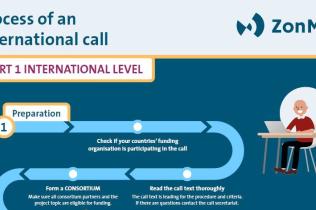 Within ZonMw, international collaboration is increasingly important. This leads to a large group of Dutch scientists taking part in international Calls for the first time.
 - Afbeelding
 The JPIAMR celebrated 10 years of international research into antimicrobial resistance. View the JPIAMR-project results.
 - Afbeelding
 What are effective prevention strategies for anxiety and depression in young people? How do we develop batteries for laptops that can be charged in under a minute? These are 2 of the 43 research projects of scientists who have been awarded a Vici grant. Each researcher receives a maximum of one and a half million euros.
 - Afbeelding
 Eight projects that will have a direct effect on the course of the coronavirus outbreak (COVID-19) and public health will soon be starting. This is the first result of the commission of the Ministry of Health, Welfare and Sport to ZonMw to finance critical research with a direct impact on the current corona pandemic.
 - Afbeelding
 Sign up for the ZonMw-symposium on Tuesday 26 September: 'Knowing HOW: 25 Years of Implementation Science and Practice'.
 - Afbeelding
 ZonMw has been funding the Oncode Institute on behalf of the Ministry of Health, Welfare and Sport since its establishment in 2017. It is a research institute that brings together more than 800 researchers from 13 Dutch partner institutions.
 - Afbeelding
 Hormone therapy can help many people with breast cancer. These drugs unfortunately do not work for every patient and even those who do respond often develop resistance over time. Patients with metastatic disease usually need to switch to other, often more intensive treatments.
 - Afbeelding
 Read about the start of the European partnership One Health AMR. This programme aims to reduce the global antimicrobial resistance.
 - Afbeelding
 Four consortia will soon begin work as part of the NWA programme Vulnerability and resilience in an online society aimed at developing greater knowledge regarding the long-term effects of online societies. This knowledge will enable government departments and authorities to develop appropriate policies.
 - FRAIL-HF: learn how to improve the quality of life of for frail older patients with heart failure in primary care and prevention of readmissions.
- This pilot project investigates the risk of re-infection in sepsis survivors in the first year after hospital discharge and estimate the adverse outcomes attributable to its occurrence.